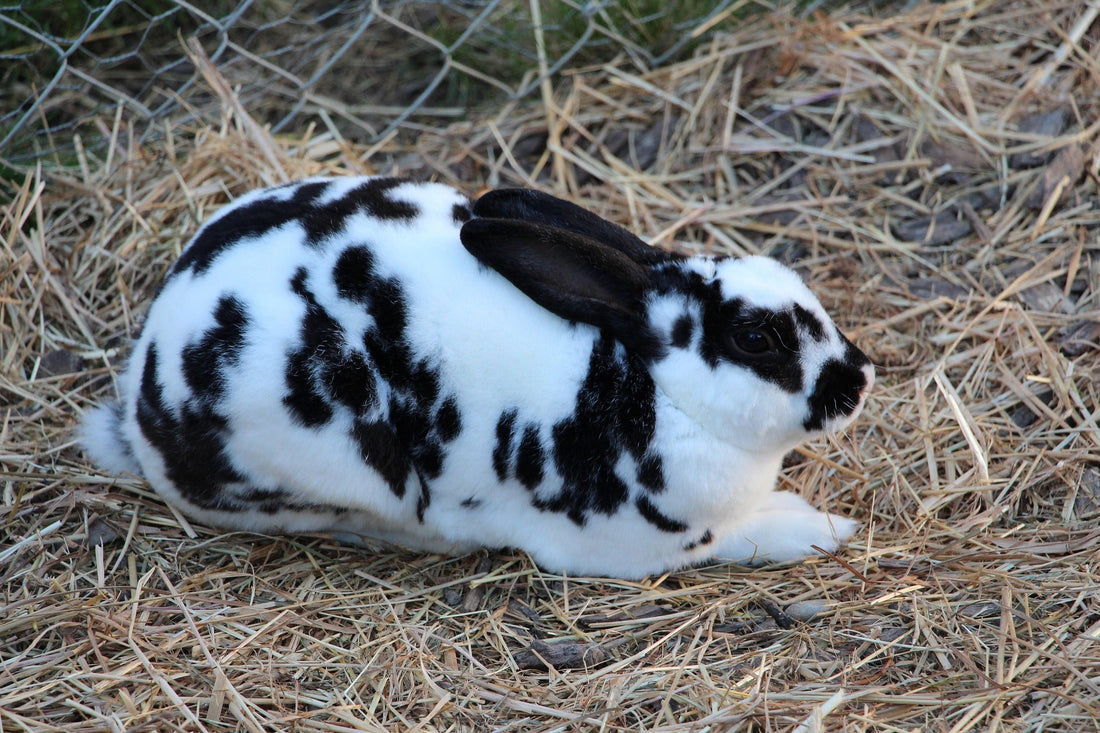
Megacolon
Megacolon syndrome is largely unknown among rabbit owners. Only those who are deeply involved in rabbit keeping or have had an animal with this hereditary disease at home might have heard of Megacolon.
In 2014, two rabbits came to us, Lilli and Lotta - two sisters. Both, along with their mother and older sister, were left in a cage in front of the local animal shelter. Further siblings were born on New Year's Eve. The family grew up safely in a foster home.
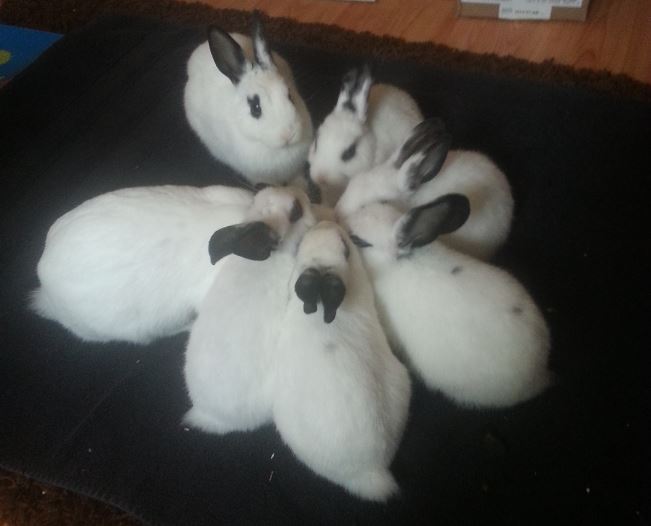
From this group, we adopted the smallest female rabbits, at 12 weeks of age. Both were white, with a small percentage of black spots. Both were smaller than their siblings, which could have indicated delayed development. Rabbits with Megacolon syndrome are smaller than their siblings as juveniles.
Megacolon in the first year of life: delayed development and oversized droppings
Both rabbits thrived as late bloomers from the age of 1 year. They grew and were well-nourished, weighing about 1.8 - 2 kg. Appetite was always present.
A first peculiarity was the size of the droppings. The pellets were disproportionately large compared to their bodies. Both left behind oversized excretions. We looked at the droppings with respect. As we know today, this is a first indicator in white rabbits with less than 5% different colored fur markings.
Megacolon in the second year of life: parasites
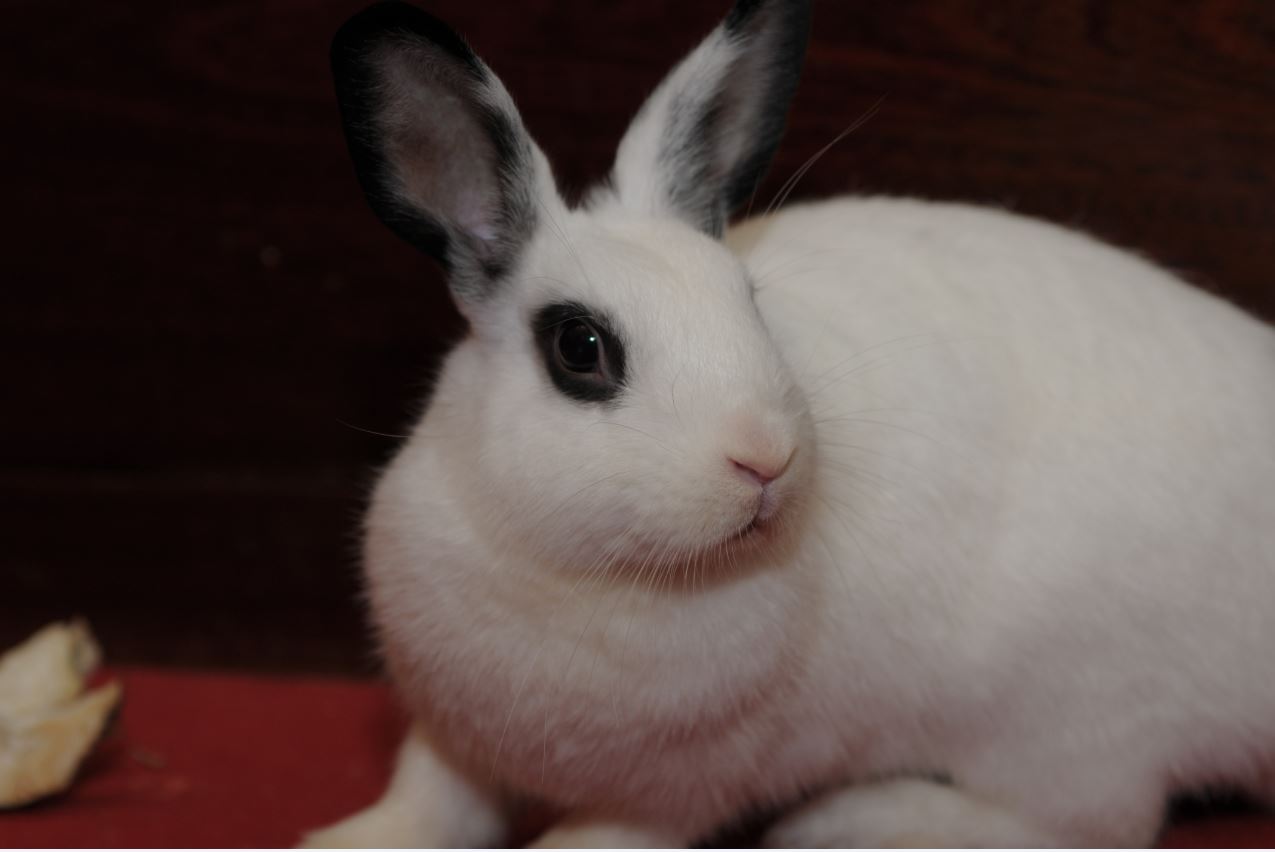
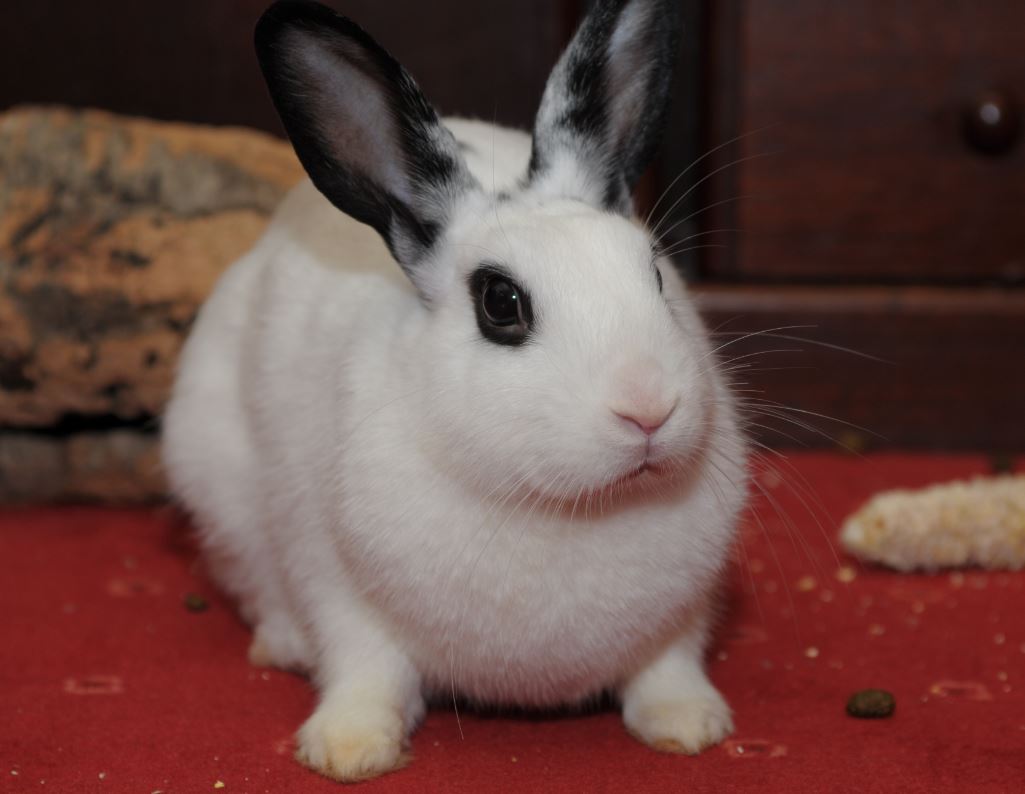
Of course, we also take stool samples from our own animals and discovered worms in their second year of life. Successfully treated with Fenbendazole, the next stool sample showed coccidia. So we alternated and were only rarely parasite-free. The constant presence of intestinal parasites could have been another clue to Megacolon. In addition, Lotta's immune system declined, and she was the only animal in the group to get a cold. But no one else got infected.
Megacolon in the third year of life: weight loss
In their third year of life, both sisters became noticeably thinner. Although their diet initially did not change, and later oily seeds were used to counteract this, both sisters lost weight, as can be clearly seen in the profile picture. Their bellies remained round, but their flanks sunken. The weight loss occurred even when large quantities were eaten. Other animals in the group, however, gained weight. Today we know that Megacolon, as an enlarged colon, inhibits digestion and leads to insufficient absorption of nutrients.
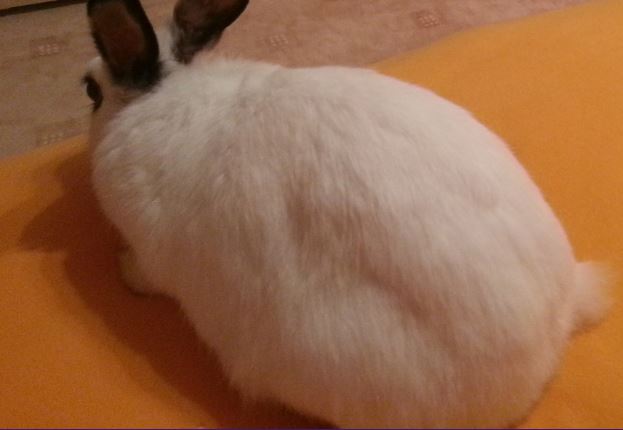
Megacolon end of third year of life: Lilli dies of gastric stasis
Without warning, Lilli developed constipation on Christmas Eve. She never fully recovered from the emergency surgery. Her circulatory system collapsed. Through discussions with experts, the suggestion of Megacolon was made. Now everything fit together and formed a pattern.
Megacolon end of fourth year of life: Lotta's condition deteriorates significantly
With knowledge of the disease Megacolon, we tried to build Lotta up and counteract the illness. Lotta's weight loss continued. We tried with seeds, lactulose, black cumin oil, and instant oat flakes. All in vain! Our group had become plump, but Lotta was skin and bones.
In her fifth year, Lotta died weighing only 1.2 kg from gastric stasis.