
In nature, rabbits live gregariously in extended families. Keeping a rabbit alone is not species-appropriate and is a violation of animal welfare. Keeping rabbits with other animals (e.g. guinea pigs) does not satisfy their need for conspecifics and social interaction and is equivalent to "single housing" for rabbits.
If a new rabbit is allowed to move in after the death of an animal, violent altercations with injuries between the animals can easily occur, so that the owner may consider a socialization impossible and leave the animal in "solitary confinement". The failure of a socialization is almost always due to mistakes made by the owner. Successful rabbit socialization requires experience and a steady hand. A neutral space and a secure enclosure of optimal size are advantageous. Dedicated owners look forward to a new socialization with concern. Often, no neutral space is available in the territory, and the existing enclosure has too many one-way streets and barriers.
To prevent the failure of socialization in advance, we offer rabbit introductions as a service at our pet boarding facility, using a neutral space. Socialization is one of our main tasks. We can look back on almost 15 years of socialization history and resolve even seemingly hopeless cases with expertise and extensive experience. Thanks to our routine, safe handling, and knowledge of the animals' genetic programming, we avoid significant injuries during socialization.
SOCIALIZATION SERVICE
For rabbit introductions as a service, a one-time flat fee of 50 EUR plus accommodation costs in the desired enclosure will be charged.
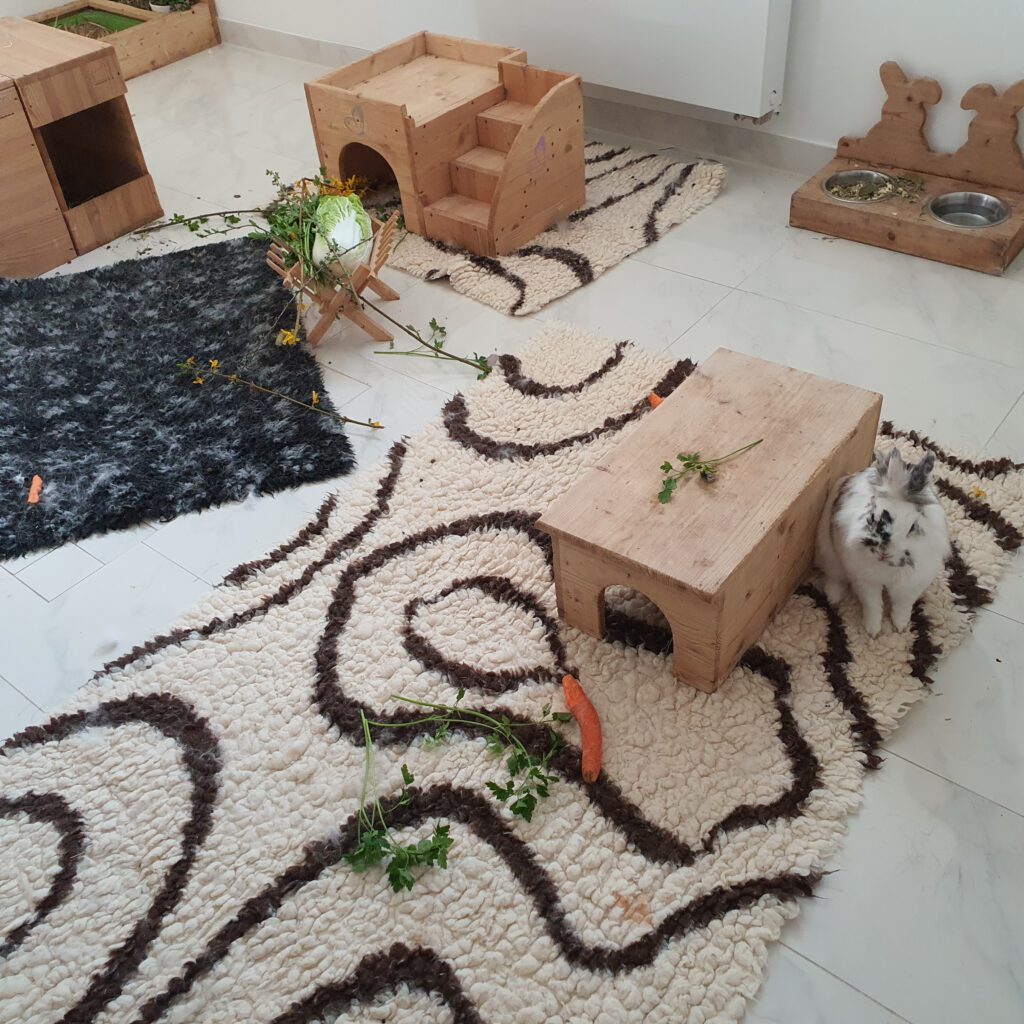
Tips for introducing rabbits - if you try it yourself
Why do rabbit introductions go smoothly for some owners? There are basic rules to observe when introducing rabbits that simplify this much-discussed topic and make the process easier. The following information is intended to provide assistance and understanding for bringing animals together.
Consider their character!
First, the suitable choice of partner is paramount. When acquiring a new family member, the animal's character should be the focus. Do not primarily focus on the animals' appearance, but on character aspects! It doesn't necessarily have to be a lop-eared or Rex rabbit – let the animal shelter or foster home advise you on which animal best matches your darling's character. Foster homes spend a lot of time with the animals during their care period and can make concrete statements about the character of the animal up for adoption.
Not necessarily a question of age
Partners of the same age are sought, but are not always available for adoption. Give the age range more flexibility! Experience shows that the characters primarily need to harmonize; age is secondary! It is generally true that older animals are usually calmer. Even a young animal can have a calm character. We have shown that a young animal can also harmonize with a senior if a. the senior is fit for its age and b. the young animal behaves in a submissive, balanced and extremely calm manner. In this constellation, the young animal will be a fountain of youth for the senior. Both will discover the world anew together – which can give the older animal new zest for life.
Dominance
Case A: Two submissive rabbits
The key to successful socialization is to create a balanced relationship. The simplest constellation is to socialize two submissive rabbits. In practice, we often observe mutual ignoring. Nothing happens! Both avoid each other and freeze as soon as the new partner even looks in their direction. Wonderful! After a few days, they approach each other, meet by chance at the feeding station and realize that the other one is actually quite nice and means no harm. Socialization complete!
Case B: Dominant meets submissive
The socialization of a submissive and a dominant rabbit proves to be unproblematic. The dominant one will take charge and start a chase about 30 minutes after the first encounter. Experience shows that the first day involves intense chasing. In the following days, this behavior gradually decreases. On average, after 5 to 7 days, the socialization of two rabbits is successfully completed.
Case C: Dominant meets dominant
Allowing two dominant rabbits to meet requires strong nerves from the owner. There will be intense chasing and fur loss. Even if the socialization looks worrying, as long as no serious bite injuries occur, you as the owner should definitely endure the situation. Check both animals for bite injuries in the morning and evening. The socialization should not be aborted and restarted unless there are injuries. Do not separate the animals without reason or out of false sympathy – not even "at night" – but leave the pair together in the enclosure. The two rabbits know what they are doing – your task as the owner is to observe what is happening, keep your nerve, and check for bite injuries. If you notice significant bite injuries, consult a vet and another person known as a socialization expert. Here you will find free advice. After about 7-10 days, the socialization should be complete.
Case D: Large group
When several animals meet in a group, the same rules apply. A group socialization takes longer than a pair socialization. For a group of 3 or 4 animals, expect an average of one month. Of course, in a submissive constellation, the socialization time can be shorter in individual cases. Young animals in a kindergarten group also complete socialization in a few hours.
Is there a young animal bonus?
Yes, there is, certainly! However, this is not a "puppy protection" as is often assumed. The young animals are not yet in puberty and have not yet developed dominant behavior. Accordingly, there is no reaction from the young animal to the dominant behavior of the adult animal. The socialization is short or sometimes even absent. Adult animals are an enormous enrichment for young animals. As guardians, they teach the young rabbit behavior. This is important if the animals were separated from their parents before the 12th week. We have had a lot of positive experience with this form of socialization in our foster home.
Never place a young animal unsupervised with a highly dominant adult rabbit in a small territory. Young animals still have thin skin that can be easily injured. If the adult animal is a submissive, fearful, and calm-natured partner, you can proceed with the socialization – stay nearby on the first day and consult an expert if the situation becomes distressing for the young animal.
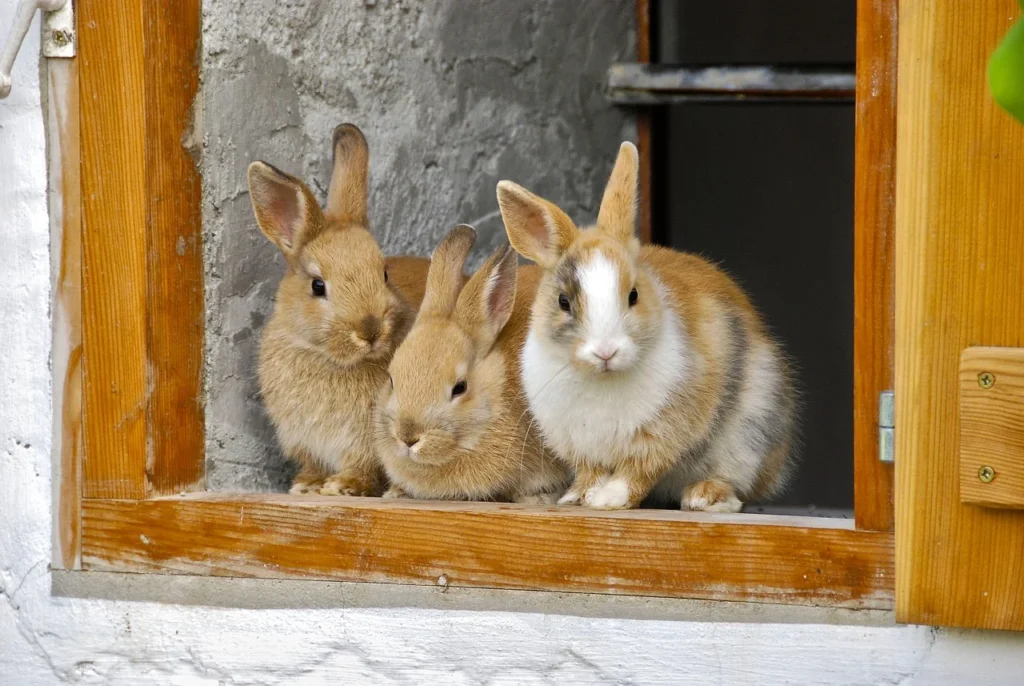
Consider gender
If you unexpectedly acquire a new partner animal, you should first turn the dwarf over! If you are greeted by two magnificent "bells", you should immediately arrange a castration appointment and postpone the socialization by 4-6 weeks.
Case A: Male meets female
Basically, a male-female constellation is the best option. Mixed-sex socialization succeeds in almost all cases.
Case B: Male meets male
Even two neutered bucks can get along well, appreciate and groom each other. A good option for oldies!
Case C: Female meets female
Exclusive female socialization is possible, but it is the least preferred option. Especially when it comes to young animals, harmonious cohabitation can be disturbed with the onset of puberty. From then on, you might find two "bitches." In this case, we recommend adding one or two neutered bucks – preferably dominant ones – who will bring harmony to the group of ladies.
Case D: Large group
In the case of larger groups, sibling groups or groups of young animals — our so-called kindergarten groups — gender is of secondary importance. Generally, for adult animals, an excess of neutered males is recommended.
Never socialize unneutered bucks. This can lead to serious injuries, potentially fatal. For successful socialization with a harmonious outcome, all bucks should generally have been neutered for at least 4 weeks. During the period after castration, hormones are broken down, so each passing day allows the socialization to become calmer. If unneutered females participate in the socialization, the 4-6 week castration period should be observed to prevent unwanted offspring.
Duration of introduction
Socialization typically lasts:
2 animals: 3-5 days
4 animals: 7-14 days
6 animals: 10-30 days
Large groups: at least 14 days
Neutral space
To your place or mine? No, it's best for rabbits to meet in a neutral place. A rabbit's own territory is "sacred," and a still-unfamiliar long-eared animal is an "intruder in the bedroom." The new animal is classified as an adversary. Now, not everyone has a spacious enclosure available for socialization. So, as an alternative, simply use the hallway or kitchen, especially if the animal "with old rights" has hardly spent any time there. In case of doubt, temporary repurposing of a friend's or acquaintance's apartment for the first rendezvous is also a good solution.
When returning to the existing territory, thoroughly clean the enclosure, remove bedding, rearrange furnishings, and overwrite existing scent markings by wiping all surfaces with vinegar water or peppermint tea. The scent markings that rabbits use to document their "property claims" in the territory will be removed.
The breed is not insignificant
We are often asked if breed is important for socialization and we answer with a "yes and no". As a rule, socializing rabbits of a larger breed is easier. Put two giants together – usually the socialization only takes minutes – then they are done and move on to eating together. Try this with wild mixes – you can expect a socialization period of about 6 months. For inexperienced rabbit owners who are worried about socialization, we recommend the giants. The large ones are wonderfully uncomplicated and comfortable.
The way to a rabbit's heart is through its stomach
With abundance, there's less reason to quarrel. A varied food supply, diverse hay racks, cleverly placed kohlrabi leaves, green fodder, and especially hazel, beech, or fruit tree branches are always effective distractions and increase well-being in togetherness. You can scatter a handful of pea flakes and cranberries like "sweets" in the room. Those busy sniffing out food and treats have no time to quarrel!
Does size matter?
Don't be afraid of size differences in socialization! Neither size nor appearance has an influence on the success of a socialization. You can safely place a dwarf with a giant. As a rule, the giant will submit to the dwarf. The dwarf will chase the giant – so pay attention to the well-being of the larger one.

Do not buy an animal from a breeder!
Do not buy an animal from a breeder; instead, visit animal shelters and foster homes. Breeders often separate animals from their mothers as early as 6 weeks for economic reasons. For a rabbit to be adequately socialized, it should stay with its mother until at least the 12th week. In our foster home, we keep the animals for 12 weeks to ensure that all essential behavioral elements are learned. The food provided is often of inferior quality, disease pressure is high, and hygiene is expensive. These animals, which come from our kindergarten group, are exceptionally well socialized and will not cause problems during socialization. Their droppings have been examined. If rabbits are separated from their mothers too early, behavioral problems during socialization can occur later in life.
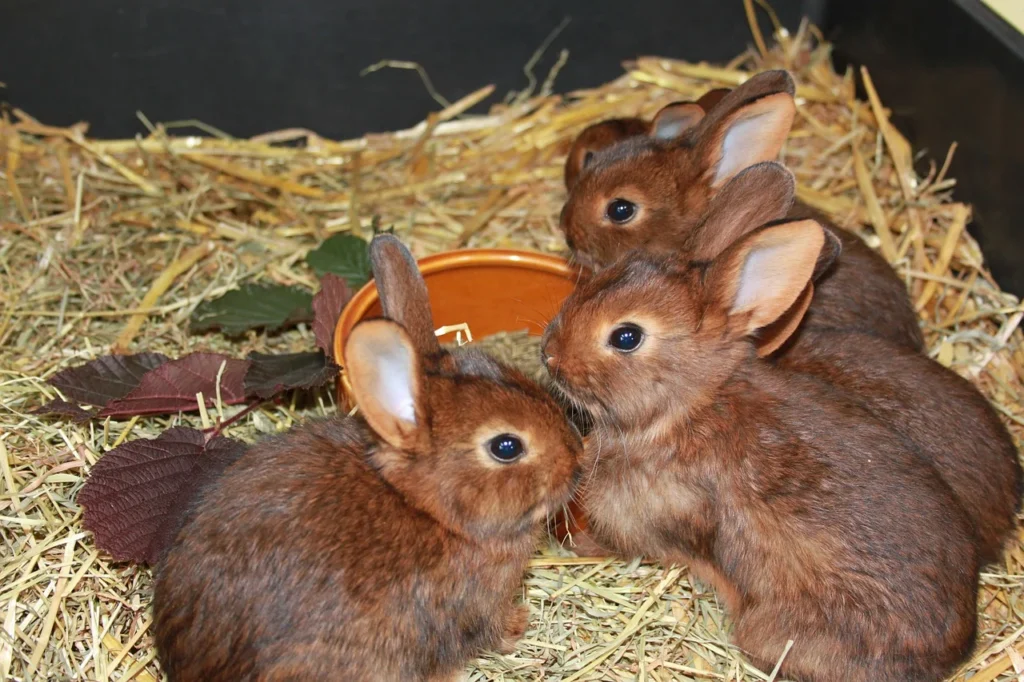
Health before and during socialization
If you are getting a new rabbit, you should first observe 7 days of quarantine, unless it comes from an animal shelter or foster home. Your first visit should be to the vet for an examination and to arrange the RHD2, RHD1 and myxomatosis vaccination appointment.
Be sure to submit a stool sample, collected over 3 days. Especially animals from breeders often bring uninvited guests – be it worms, coccidia or mites. This protects your own pet! A stool sample is especially important for young animals. Coccidia are the most common cause of death in rabbits. Contrary to general assumption, they do not necessarily cause diarrhea. During socialization, coccidia accumulate in the organism due to stress. In the worst case, severe coccidia can lead to the death of the animal during socialization. Therefore, be sure to take the stool sample to the vet!
In general, you should wait a few days after vaccination for the little one's body to recover from the vaccination. Do not put him into socialization freshly vaccinated. We humans also tolerate vaccinations more or less well. Therefore, apply your vaccination experience and give the little ones time to recover.
Likewise, you should not enter into socialization with a fresh castration wound. The wound needs at least 5 days to heal properly.
Environmental factors
Environmental factors play a certain role in socialization. One often reads about a neutral room. This is the ideal case, but not always feasible in practice. It is certainly advantageous to clean and rearrange the enclosure with vinegar water or peppermint tea. However, in many outdoor enclosures this is often difficult. In practice, we often have to rely on the existing enclosure. But this is not dramatic if enough space is available. For a pair, you should have 6 – 8 square meters of space. For larger groups, the space requirement is higher.
It is important to eliminate all one-way streets and offer houses with 2 exits as shelters. These provide places for the animals to rest. Cover mesh elements with cloths or blankets so that the little ones don't get their feet caught. Furthermore, the way to a rabbit's heart is through its stomach – distribute treats in the enclosure!
The owner's nerves
The most influential factor that causes socialization to fail is the owner. Be patient and keep your nerves. Good things take time. Practice teaches patience, it will work!
Loss of fur is part of it. This is not an indicator of a failed socialization. On the first day, pay attention to possible bite injuries. Sit in the enclosure with a cup of coffee and observe the goings-on intensively for a few hours. Check the animals several times for bite injuries. If none occur, you can assume with a high probability that the socialization is working. After a few intensive hours of observation, it's best to go to the cinema. The rabbits will do the rest.
As long as there are no significant injuries, the animals don't get stuck, and no rabbit screams, there is no reason to intervene. Above all – do not separate them! Not even at night.
Keep ready for wound disinfection:
- Betaisodona,
- Manuka honey wound ointment and
- Optisept.
Minor bite injuries are normal and usually occur during socialization. It is important to treat these wounds to prevent abscesses, which can stubbornly develop from a small wound.
If you expect an intense socialization due to dominance, you can work with Bach flowers and Rescue drops – for the rabbits – as well as a spoonful for the owner themselves.
When all else fails
In rare cases, one must honestly admit that even with all these tips, rabbit socialization can fail. Perhaps this specific combination of characters just doesn't fit.
You shouldn't give up immediately and think that this rabbit is rather a loner. Rabbits have different characters, and perhaps in this case, the "chemistry" simply isn't right! But before you permanently separate your two fighting cocks, please contact us to help you and the rabbits.